

Partnership between Nutri&Co; and Nahibu

Partnership between Nutri&Co; and Nahibu

Bio Fibers, the first ingredient developed by Nutri&Co, certified vegan and low-FODMAP!

Can you tell us about Nutri&Co?

Nutri&Co is a young French company founded in 2017 that strives to legitimize the key role of nutraceuticals in preventive healthcare. Nutraceuticals is the generic name for the dietary supplement industry. These two words are actually just the regulatory designation. Our job is to develop high-quality formulas and promote them through communication and marketing, the latter of which is currently exclusively digital. Today, Nutri&Co employs more than 30 people in Aix-en-Provence and has developed 14 formulas, all of which have become must-haves. In total, more than 600,000 bottles have been sold since the company was founded.

Can you tell us about your product?

Our Organic Fiber Mix is a combination of soluble organic guar gum and acacia fibers designed to provide an easy source of dietary fiber. It has been specially developed for people suffering from IBS (Irritable Bowel Syndrome) who generally limit their fiber intake or rigorously select the fibers they consume and favor a low-FODMAP diet, which is difficult to follow strictly.

Our mix combines effectiveness and practicality: with approximately 5.3g of fiber per serving, it is tasteless and odorless, perfectly soluble in hot or cold drinks and yogurt, and can be easily incorporated into cakes and cooked dishes. We have even published a recipe book to make it easier, more fun, and more appetizing to include in your daily diet. The challenge in developing the product was to find the optimal granulation to ensure the mix was soluble and easy to use in your daily preparations.

Our formula is Low-FODMAP certified: Certified Low-FODMAP by Monash University (a leader in FODMAP research), our Organic Fiber formula is specifically designed using clinically documented dietary fibers to allow people with IBS to consume more fiber without experiencing discomfort.

Presentation:

In a 250g doypack bag. With measuring scoop.

  • 1 scoop = 5.3g of fiber. 1 to 5 scoops per day.
  • For 1 scoop/day: sachet lasts 1.5 months
  • For 5 scoops/day: the bag will last 9 days
Nutri&Co;

What are the health and wellness benefits of consuming these fibers?


Our eating habits have changed significantly, and above all, they have changed very quickly. One of the publications resulting from the analysis of NutriNet Santé data (scientific work studying the eating habits of French people) is very clear: out of a total of more than 100,000 participants monitored between 2009 and 2019, the consumption of ultra-processed and ultra-formulated products (high in energy and low in nutritional value) is at the expense of fiber consumption [1]. This is logical, since the industrialization of food has led to a decrease in the consumption of products that undergo little or no processing: raw fruits, vegetables, and whole grain products.

These behaviors and food choices automatically lead to a decrease in fiber consumption. In France, ANSES has established that a sufficient intake of dietary fiber for adults is 30g/day. At the European level (EFSA), the recommendation is around 25g/day. The latest French INCA survey [2], conducted in 2017, revealed insufficient daily fiber intake, with an average of only 19.6g. Analysis of food consumption in the NutriNet Santé cohort confirms these values, concluding that fiber intake is around 19.5g/day [3]. Insufficient fiber intake has also been reported in other developed countries, suggesting that this is a truly global problem [4].

The importance of fiber in daily life


In general, the health benefits of high-fiber diets are well established and are correlated with:
[14–16]: 

  • Fewer intestinal disorders,
  • Better weight control: increased food volume and slower digestion (satiating effect),
  • Better blood sugar control (blood glucose levels): slowing down sugar absorption (limiting blood sugar spikes) and reducing the tendency to store excess sugar as fat,
  • Better cholesterol control (LDL levels in the blood): capture of cholesterol that can be eliminated in the stool.

Take care of your microbiota with Nahibu.

Fiber and irritable bowel syndrome

The World Gastroenterology Organization (WGO) defines irritable bowel syndrome (IBS), irritable colon, or functional colopathy as a functional intestinal disorder in which abdominal pain or discomfort is associated with defecation and/or a change in bowel habits. IBS is a fairly common disorder that affects approximately 11% of the adult population worldwide and nearly 5% in France. Its prevalence varies between countries and affects three times more women than men [18–20]. Several causes or triggers are suspected. In all cases, it would appear that the origin is multifactorial: 

  • Diet
  • Psychological factors (such as stress)
  • Infections
  • Microbiota health (richness and diversity)
  • Genetic factors

Fiber is difficult to digest for people with irritable bowel syndrome. It can cause characteristic digestive problems such as gas, bloating, constipation, diarrhea, etc. [21]. As a result, people with IBS avoid dietary fiber because of the discomfort it causes, even though it is essential for their health. Furthermore, less fiber has an impact on their microbiota, which becomes poorer, which can aggravate their IBS, creating a vicious circle.

It should be noted here that there are two categories of fiber depending on their solubility: soluble fiber and insoluble fiber. When it comes to diets for people with irritable bowel syndrome (IBS), there is a consensus that a low-FODMAP diet may be considered on a temporary basis (especially if general advice on diet and lifestyle proves ineffective).

In practice, people with irritable bowel syndrome will seek to limit their consumption of foods rich in FODMAPs. But how can FODMAP-type fibers be excluded without sacrificing all dietary fiber?

Our Low-FODMAP Organic Fiber Mix has been formulated to:

  • increase fiber intake simply and effectively,
  • meet fiber needs and, more specifically, address the pronounced deficiencies in people with irritable bowel syndrome.

For this formula, we have selected two soluble fibers whose physicochemical properties (including optimal viscosity) allow them to be slowly fermented by the gut microbiota:

  • Partially hydrolyzed guar gum fiber (galactomannan),
  • Acacia gum fiber (arabinogalactan).

Clinical data on our selected fibers for IBS

Acacia fiber [22] and partially hydrolyzed guar fiber [23,24] have been studied in the context of irritable bowel syndrome. They have shown good tolerance in people with irritable bowel syndrome, indicating that they can be taken as a daily supplement to compensate for fiber deficiency.

Recommendations

  • Our Organic Fibers are not defined as a formulation to directly reduce the symptoms of irritable bowel syndrome.
  • Our Organic Fibers help compensate for potential fiber deficiency in cases of irritable bowel syndrome.

This is why our Organic Fibers duo is suitable for a low-FODMAP diet and should be incorporated into a structured diet under the supervision of a doctor/dietitian in cases of IBS.

Nutri&Co;

How did the concept come about?

In Europe, and more specifically in France, this preventive approach is new, as our view of health is culturally very curative. To put it simply, until now we waited until we got sick to seek treatment. But the health wave coming from the Nordic countries is spreading across the old continent, and the perspective gained on our modern lifestyles is leading us to adopt this proactive approach earlier and earlier. It is in this context that Edouard, a 27-year-old bodybuilding enthusiast and practitioner, became interested in nutrition. He realized that Western diets are deficient in certain key nutrients such as vitamin D, magnesium, and omega-3 fatty acids. He therefore turned his attention to nutraceuticals, but came to a bitter realization: French people are not proud to consume this type of product, which is still too closely associated with medicine, and there is widespread skepticism about their effectiveness. Added to this is the fact that the products on offer do not at all encourage personal responsibility and that the customer experience is neglected:

Product information is technical and fragmented, even for a pharmacist!
Prices vary by up to 100%, leading to a lack of confidence.
There is no transparency about products that appear at first glance to be highly processed (when in fact they are not).
Finally, the sterile aesthetics derived from laboratory culture leave no room for emotion.

Nutri&Co was therefore founded with the aim of giving nutraceuticals their rightful place in preventive health care, by establishing them as part of everyday life. This mission is embodied above all in a quest for the greatest possible effectiveness, made accessible to all. Our approach responds to the deepest aspirations of human beings: to learn and live more intensely.

The three pillars that set us apart:

Back to efficacy
We make no concessions when it comes to the efficacy of our formulas. At N&C, we don't buy environmental awareness with a kraft bottle that protects nothing, or free from products with excessive labeling… With us, what you buy is first and foremost efficacy. This is particularly evident in our bio-identical approach, which avoids the fanaticism of total vegetarianism and reconciles science and nature.

A guiding brand
The second strong element of the brand is our desire to support the need for self-care (i.e., taking charge of one's health, not self-medication). This involves carefully crafted educational content that is accessible to all, as well as a firm belief that preventive health care takes precedence over curative care. This brand pillar is reflected in our product infographics, our ability to simplify scientific discourse, our videos, and certain posts on social media.

Aesthetics to make people proud
Because dietary supplements have been marketed as medicines for too long, their consumption is taboo. To remove the stigma and promote the image of prevention as something socially valuable, we focus on aesthetics inspired by the codes of cosmetics: elegant, colorful bottles, carefully designed galenics (Licaps, etc.), and above all, positive semantics (Nutra, bottles, capsules, etc.).

What is your area of expertise?


Absolute product mastery

  • 100% in-house formulation: we don't just take products off the shelf from manufacturers, we launch pre-clinical studies
  • Control of the production chain thanks to our volumes = direct negotiation of strategic ingredients and maintenance of good prices.
  • Regulatory engineering: promoting new, promising ingredients.
  • Quality control: pushed to the level of large dietary supplement laboratories (rare in the start-up world).

A 2.0 customer experience

  • Interactive and fun omnichannel experience: eShop, e-Marketplace, prescribers, pharma, etc.
  • True transparency: names of ingredient producers, prices, and analyses.
  • Ultra-responsive, accurate, and internalized after-sales service: telephone and social media.
  • Refined aesthetics: to create an emotional connection around the act of consumption, fostering pride and loyalty.
  • Honest personalization: after the purchase process and in terms of dosage. 

Product labels

Nutri&Co;

Sources:

 Beslay, M.; Srour, B.; Méjean, C.; Allès, B.; Fiolet, T.; Debras, C.; Chazelas, E.; Deschasaux, M.; Wendeu-Foyet, M.G.; Hercberg, S.; et al. Ultra-Processed Food Intake in Association with BMI Change and Risk of Overweight and Obesity: A Prospective Analysis of the French NutriNet-Santé Cohort. PLOS Med. 2020, 17, e1003256, doi:10.1371/journal.pmed.1003256. 

  1. ANSES National Individual Study of Food Consumption 3 (INCA 3). ANSES opinion. Collective expert report; 2017; p. 566;.
  2. Partula, V.; Deschasaux, M.; Druesne-Pecollo, N.; Latino-Martel, P.; Desmetz, E.; Chazelas, E.; Kesse-Guyot, E.; Julia, C.; Fezeu, L.K.; Galan, P.; et al. Associations between Consumption of Dietary Fibers and the Risk of Cardiovascular Diseases, Cancers, Type 2 Diabetes, and Mortality in the Prospective NutriNet-Santé Cohort. Am. J. Clin. Nutr. 2020, 112, 195–207, doi:10.1093/ajcn/nqaa063.
  3. Stephen, A.M.; Champ, M.M.-J.; Cloran, S.J.; Fleith, M.; van Lieshout, L.; Mejborn, H.; Burley, V.J. Dietary Fiber in Europe: Current State of Knowledge on Definitions, Sources, Recommendations, Intakes, and Relationships to Health. Nutr. Res. Rev. 2017, 30, 149–190, doi:10.1017/S095442241700004X.
  4. Anderson, J.W.; Baird, P.; Davis Jr, R.H.; Ferreri, S.; Knudtson, M.; Koraym, A.; Waters, V.; Williams, C.L. Health Benefits of Dietary Fiber. Nutr. Rev. 2009, 67, 188–205, doi:10.1111/j.1753-4887.2009.00189.x.
  5. Slavin, J. Fiber and Prebiotics: Mechanisms and Health Benefits. Nutrients 2013, 5, 1417–1435, doi:10.3390/nu5041417.
  6. Mattea Müller; Emanuel Canfora; Ellen Blaak Gastrointestinal Transit Time, Glucose Homeostasis and Metabolic Health: Modulation by Dietary Fibers. Nutrients 2018, 10, 275, doi:10.3390/nu10030275.
  7. Lovell, R.M.; Ford, A.C. Global Prevalence of and Risk Factors for Irritable Bowel Syndrome: A Meta-Analysis. Clin. Gastroenterol. Hepatol. 2012, 10, 712-721.e4, doi:10.1016/j.cgh.2012.02.029.
  8. Canavan, C.; West, J.; Card, T. The Epidemiology of Irritable Bowel Syndrome. Clin. Epidemiol. 2014, 71, doi:10.2147/CLEP.S40245.
  9. SNFGE Irritable Bowel Syndrome Available online: https://www.snfge.org/content/syndrome-de-lintestin-irritable.
  10. Zisimopoulou, S.; Guessous, I. Irritable Bowel Syndrome: A Diagnosis of Exclusion? Rev. Médicale Suisse 2012, 1821–1825.
  11. Min, Y.W. Effect of Composite Yogurt Enriched with Acacia Fiber and Bifidobacterium Lactis. World J. Gastroenterol. 2012, 18, 4563, doi:10.3748/wjg.v18.i33.4563.
  12. Niv, E.; Halak, A.; Tiommny, E.; Yanai, H.; Strul, H.; Naftali, T.; Vaisman, N. Randomized Clinical Study: Partially Hydrolyzed Guar Gum (PHGG) versus Placebo in the Treatment of Patients with Irritable Bowel Syndrome. Nutr. Metab. 2016, 13, 10, doi:10.1186/s12986-016-0070-5.
  13. Yasukawa, Z.; Inoue, R.; Ozeki, M.; Okubo, T.; Takagi, T.; Honda, A.; Naito, Y. Effect of Repeated Consumption of Partially Hydrolyzed Guar Gum on Fecal Characteristics and Gut Microbiota: A Randomized, Double-Blind, Placebo-Controlled, and Parallel-Group Clinical Trial. Nutrients 2019, 11, 2170, doi:10.3390/nu11092170.


Discover more articles on the microbiota.

Partnership between Bio-Recherche and Nahibu

Partnership between Bio-Recherche and Nahibu

Bio-Recherche Laboratories specialize in researching and marketing high-value-added dietary supplements whose effectiveness has been proven by clinical studies, most of which justify prescription by doctors.

Take care of your microbiota with Nahibu.

Partnership between Natura Force and Nahibu

Partnership between Natura Force and Nahibu

Meet Thierry Sestrieres, founder of the French company Natura Force.


What is the story behind Natura Force?

Natura Force is a French brand of natural and organic dietary supplements for fitness and well-being. We specialize in the development and production of high-end supplements that are 100% natural and organic. Natura Force was born out of a desire to offer people the opportunity to supplement their diet naturally, using the best products on the planet, selected according to specific criteria (naturalness, purity, and effectiveness).

It was after returning from a long trip to South America, where I discovered superfoods such as maca and guarana, that I decided to import these products to France in order to offer more natural alternatives to people who wanted to take care of their health in ways other than purely pharmaceutical and sometimes purely chemical products. At the time, to my knowledge, there was no brand of organic supplements in France with such high standards. The aim was to create a truly trustworthy brand offering dietary supplements on the one hand and nutritional products that are easy to consume and, above all, healthy on the other. Above all, we want to promote better living through a more balanced, natural, and organic diet.

What dietary supplements do you offer?

Our range consists of three types of products: dietary supplements in the strict sense of the term (omega 3, magnesium, etc.), nutritional products or superfoods (chia seeds, goji berries, sweet potato flour, etc.), and natural, cold-pressed drinks (sea buckthorn juice, chia seed juice, etc.).

3.Nahibu

Who are your products for? 

Our products offer specific and varied benefits and can be adapted to suit everyone's needs. Whether you are a student, a senior citizen, a high-level athlete, or simply someone looking to improve your well-being, our products can easily be adapted to your daily life.


What expertise do you offer?

Natura Force specializes in the design and manufacture of natural and organic dietary supplements. Our products are designed to be as effective as possible thanks to their bioavailability and the different concentrations of active ingredients they contain. We are certified Agriculture AB Bio, GMP, and HACCP. Some of our products are also fair trade, and most of our products, with a few exceptions, are manufactured in France.

Labels_Natura

Take care of your microbiota with Nahibu.

Discover more articles on the microbiota.

Partnership between Bio-Recherche and Nahibu

Partnership between Bio-Recherche and Nahibu

Bio-Recherche Laboratories specialize in researching and marketing high-value-added dietary supplements whose effectiveness has been proven by clinical studies, most of which justify prescription by doctors.

Take care of your microbiota with Nahibu.

Partnership between Naturamind and Nahibu

Partnership between Naturamind and Nahibu

Naturamind, relearn how to do yourself and the planet good!

Naturamind, a brand committed to responsible ethics.

Naturamind was founded in 2016, born from the idea of a doctor of pharmacy who wanted to develop a unique concept with meticulously selected ingredients and original packaging for high-quality natural products that meet the concerns of tomorrow's consumers. Two years later, Yann Wenz took over the reins and steered the brand in a more environmentally friendly direction.

In the wake of health, food, and climate crises, we have become well aware that our behaviors have a real impact, too often a negative one! At Naturamind, we are convinced that, each at our own level, we can improve the course of events by becoming the primary actors in our own well-being. Indeed, we can change our behaviors to positively impact our environment, our fitness, our health, and, in a way, our happiness.

Can you tell us about your product range?

We have developed a range of organic, natural, eco-designed dietary supplements manufactured in France with a distinctive identity thanks to their original and distinctive packaging: sumptuous glass bottles reminiscent of the distant origins of phytotherapy and herbal medicine. By taking great care and applying high standards in the selection of raw materials, we offer formulas based on bio-sourced active ingredients, sourced from extensive harvesting, with the right dosage for an optimized effect on the body. We have high standards when it comes to the traceability, naturalness, and effectiveness of our products.

In particular, we want to be the preferred partner of active people in the broadest sense of the term, who are involved on all fronts (family, social, professional, personal, etc.), but who above all seek balance and harmony in their lives and want to flourish in all these roles without sacrificing any of them. It is therefore for these people who literally want to live life to the fullest that we have created this short, simple, and accessible range, which allows as many people as possible to find the solution that suits them, to be taken alone or in combination. Everyone can thus tailor their treatment to their own needs at any given time.

A daily ritual where you take care of yourself, where you do yourself good while preserving the planet, a well-deserved personal break after taking care of everyone around you.

We

What are the health and wellness benefits of taking these dietary supplements?

We use the best that nature has to offer to help you achieve better health and balance. Certified by the European Commission, Naturamind dietary supplements are meticulously designed to provide the daily dose needed to have a real effect on the body and its needs. Available in tablets or vegetable capsules, the products are formulated from ingredients that are predominantly sourced from organic farming. All these active ingredients are effective over time, which is why it is recommended to take courses of treatment of varying lengths depending on the product. Naturamind dietary supplements are suitable for everyone, including vegetarians, as our capsules are made from vegetable gelatin rather than animal gelatin. 

Medical and pharmacological expertise

The formulas are designed in-house by health experts. This healthier and more balanced approach is based on scientific findings from phytotherapy and on the principles of traditional and universal medicine that have been proven over thousands of years.

Certifications

  • Certified by the European Commission: Naturamind products carry health claims certified by the European Commission, which means that each selected plant, combined with a daily dosage, has a real impact on the body and its needs.
  • ECOCERT organic certification: a long-standing player in organic farming certification, Ecocert has been recognized for its independence, competence, and impartiality for over 30 years.

Certified

Organic & Natural

The Naturamind team takes particular care and is highly selective in its choice of bio-based active ingredients, constantly seeking innovations to establish itself as a genuine healthy alternative to chemical substances. The products contain no additives that could alter the quality and effectiveness of the plant. They are made from whole or partial plants, algae, and bee products, recognized for their benefits and guaranteed GMO-free, preservative-free, and allergen-free.

Eco-designed

    • Aware of environmental issues, the bottles containing the vegetable capsules or tablets are made of 100% recyclable or reusable tinted glass.
    • This distinctive and meaningful packaging made from sustainable materials guarantees optimal preservation of the active ingredients over time and can be reused as a beautiful decorative object.
    • 100% eco-friendly packaging: the glass bottles are protected by recycled cardboard.

Made in France 

Harvested in their country of origin, the plants or plant extracts are received, analyzed, and then checked in independent French laboratories, before being incorporated into a controlled production process: blending and assembly in a galenic format, adapted to a dosage aimed at optimizing treatment compliance, then packaged in different pill box formats or, in the case of liquid forms, in glass ampoules.

A holistic approach to well-being

We are convinced that each of us, at our own level, is and must be an active participant in our own well-being (mental, physical, environmental, etc.)

The guarantee of a successful customer experience

We work closely with our customers, providing them with personalized advice from our health experts to meet their specific needs.

Highly responsive customer service via email, telephone, and social media.

Discover more articles on the microbiota.

Partnership between Bio-Recherche and Nahibu

Partnership between Bio-Recherche and Nahibu

Bio-Recherche Laboratories specialize in researching and marketing high-value-added dietary supplements whose effectiveness has been proven by clinical studies, most of which justify prescription by doctors.

Take care of your microbiota with Nahibu.

Which foods are highest in fiber?

Which foods are highest in fiber?

Which foods are highest in fiber?

Fiber is a complex carbohydrate of plant origin that is neither digested nor absorbed by the body. There are two types of fiber: soluble fiber and insoluble fiber.

Nahibu

What is fiber good for?

Insoluble fiber increases stool volume and stimulates intestinal transit. It promotes satiety. Soluble fiber lowers cholesterol levels and improves carbohydrate absorption. It also reduces blood sugar and insulin levels after meals. Finally, they stimulate the growth of good intestinal bacteria and are associated with a reduced risk of cardiovascular disease.

Nahibu

What are our fiber requirements? 

ANSES recommends consuming 30 grams of fiber per day, equally for men and women. On average, adults consume 17.5 grams of fiber per day. It is therefore important to include fiber-rich foods in your diet to increase your fiber intake.


Nahibu

Where can fiber be found?

Fiber is naturally present in food, but some types of food contain more than others.

Grains and seeds

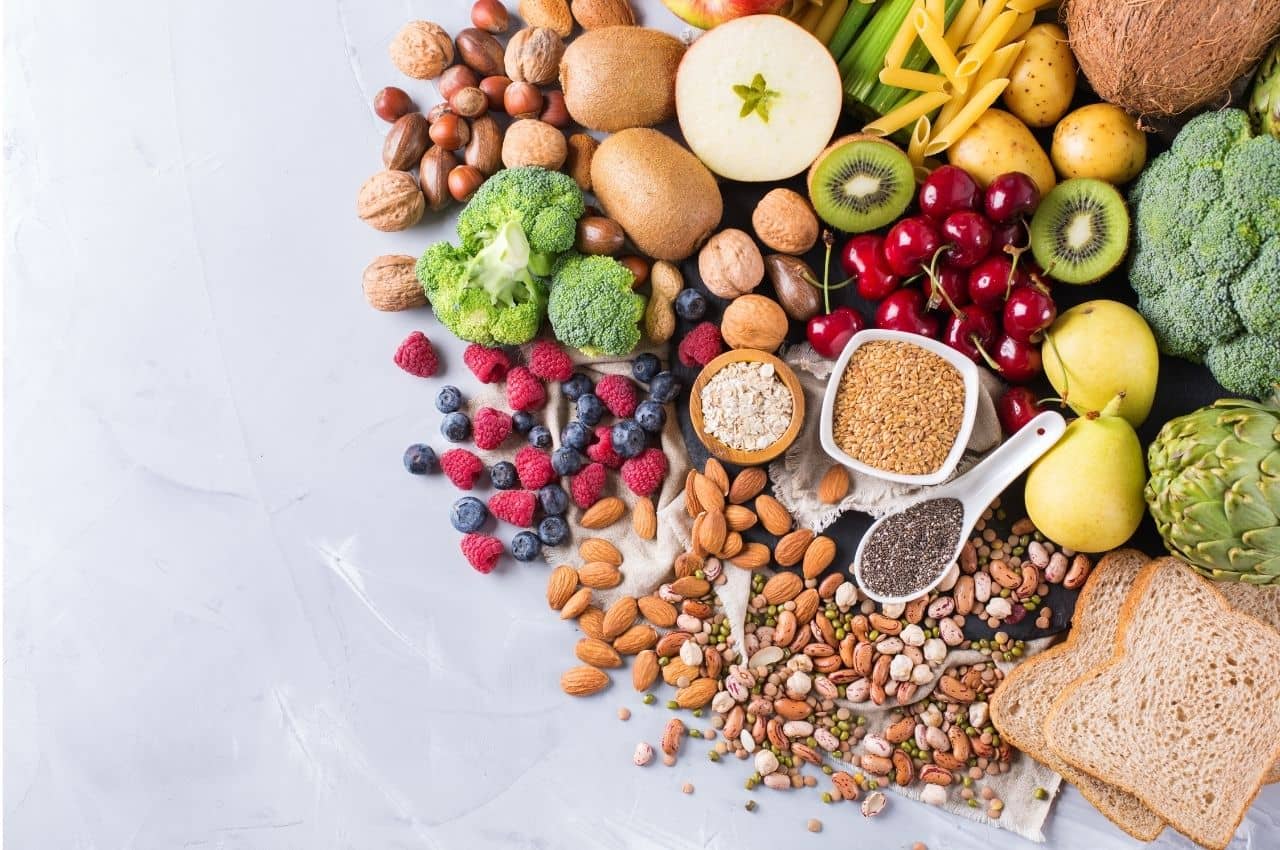
Cereals and seeds are excellent sources of fiber. Corn bran contains 79 grams of fiber per 100 grams and wheat bran contains 42 grams. There is also rice bran (21 grams per 100 grams), oat bran (16.7 per 100 grams), etc. Chia seeds contain 34.4 grams and flax seeds contain 27.3 grams per 100 grams. Bran and other whole grains such as rice and wheat are sources of insoluble fiber and quickly make you feel full by swelling with water during digestion. Oats and barley provide soluble fiber, which helps lower cholesterol. Grains are also important sources of nutrients, carbohydrates, protein, and minerals. They are a significant source of energy for our bodies.

Spices and herbs

Spices and herbs are also important sources of fiber. Curry, cinnamon, oregano, coriander, and herbes de Provence provide more than 40 grams of fiber per 100 grams. They are rich in minerals, vitamins, and antioxidants such as polyphenols and curcumin, which protect the body against premature cell aging and the risk of certain cancers. Finally, they promote satiety and have anti-inflammatory properties. Don't hesitate to add them to your dishes.

Legumes

When cooked in water, legumes (red beans, white beans, lentils, etc.) contain an average of 15 grams of fiber per 100 grams. They are rich in vegetable protein, vitamins, and minerals such as iron, magnesium, phosphorus, and potassium. Legumes are commonly used as a partial substitute for meat in meat-free diets.

dried

Dried fruit

Nuts (almonds, hazelnuts, walnuts, pistachios, etc.) are also particularly rich in fiber, with an average content of 11 grams of fiber per 100 grams. They provide nutrients, healthy fats, vitamins, minerals, and antioxidants. Last but not least, they are associated with a reduction in cholesterol and the risk of cardiovascular disease. They are an excellent choice for snacks.

Fruits and vegetables

Finally, fruits and vegetables are significant sources of soluble and insoluble fiber. Among the vegetables richest in fiber are peas (5.5g/100g), spinach (3.5g/100g), green beans (3.3g/100g), celery (2.6g/100g), turnips (2.2g/100g), cauliflower (2g/100g) and, for fruit, raspberries (4.3g/100g), strawberries (3.8g/100g), apples (2.9g/100g), pears (2.9g/100g) and bananas (2.7g/100g). In addition to fiber, fruits and vegetables are also excellent sources of minerals and vitamins that are essential for the body.

Conclusion

In conclusion, fiber is a real health ally that is important to include in your diet. You should increase your intake gradually. However, you should not overdo it, as excess fiber can cause digestive problems such as flatulence, bloating, diarrhea, etc. It is therefore important to find the right balance.

Sources:

Dietary fiber. ANSES. Available at: https://agriculture.gouv.fr/sites/minagri/files/documents/pdf/Recommandation_GTFibres_VF_cle44b3dd.pdf

Ciqual. Food composition table. ANSES. Available at: https://ciqual.anses.fr/#/constituants/34100/fibres-alimentaires-(g-100-g)

Nutritional references for protein, fat, carbohydrates, and fiber (adults and seniors). CERIN. https://www.cerin.org/rapports/references-nutritionnelles-proteines-lipides-glucides-fibres-adultes-personnes-agees/


Discover more articles on the microbiota.

Partnership between Bio-Recherche and Nahibu

Partnership between Bio-Recherche and Nahibu

Bio-Recherche Laboratories specialize in researching and marketing high-value-added dietary supplements whose effectiveness has been proven by clinical studies, most of which justify prescription by doctors.

Take control of your diet with Shido.

A