

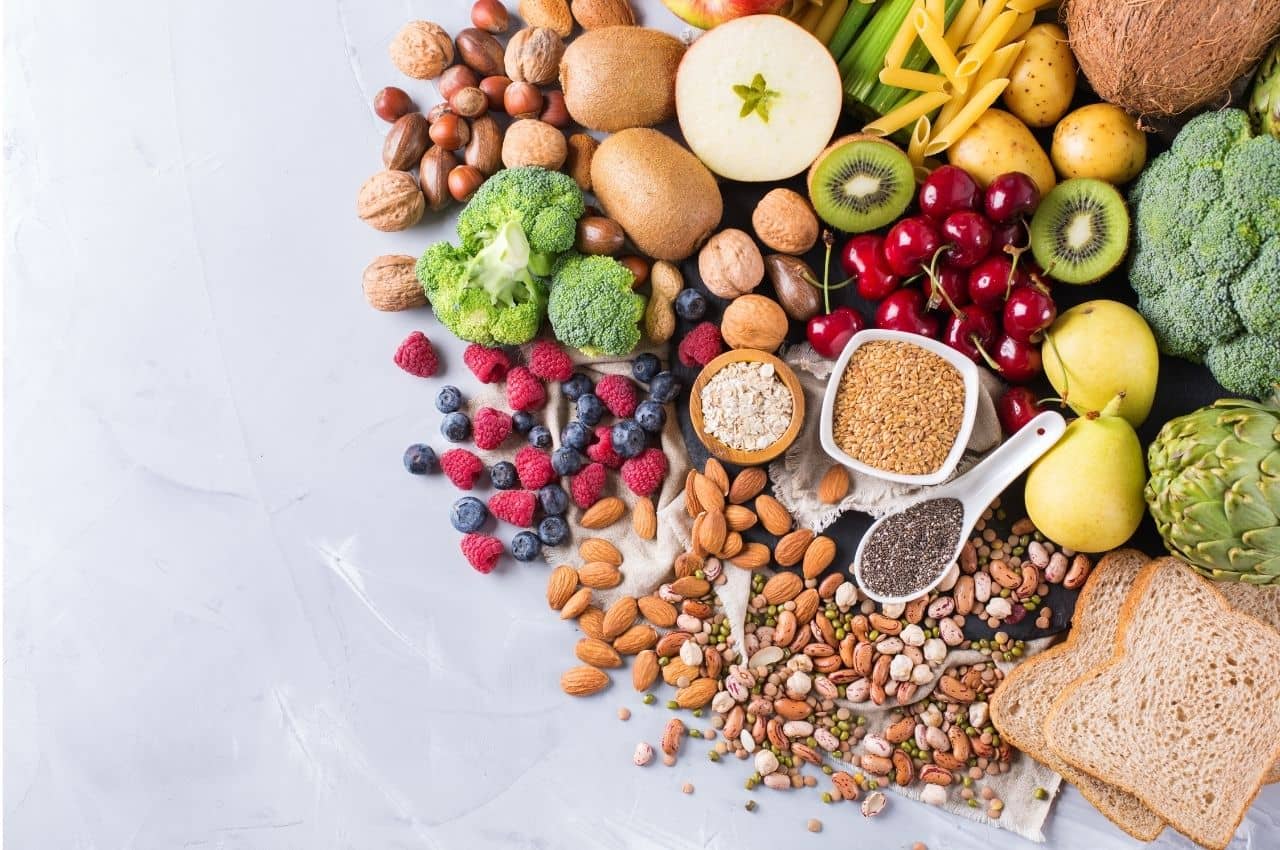
The foods highest in fiber are corn bran (79 g/100 g), wheat bran (42 g), chia seeds (34.4 g) and flaxseeds (27.3 g). Among everyday foods: cooked legumes (~15 g), nuts (~11 g), then fruits and vegetables (2 to 5 g). Target: 30 g of fiber per day.

Foods highest in fiber: the complete list per 100 g
| Food | Fiber (g/100 g) |
|---|---|
| Corn bran | 79 |
| Wheat bran | 42 |
| Chia seeds | 34.4 |
| Flaxseeds | 27.3 |
| Rice bran | 21 |
| Oat bran | 16.7 |
| Cooked legumes (beans, lentils) | ~15 |
| Nuts (almonds, hazelnuts, walnuts) | ~11 |
| Green peas | 5.5 |
| Raspberries | 4.3 |
| Strawberries | 3.8 |
| Spinach | 3.5 |
| Green beans | 3.3 |
| Apples / pears | 2.9 |
| Bananas | 2.7 |
| Celery | 2.6 |
| Turnips | 2.2 |
| Cauliflower | 2 |
Soluble vs insoluble fiber: what’s the difference?
Fiber is a complex plant-based carbohydrate that is neither digested nor absorbed by the body. It comes in two families. Insoluble fiber (bran, whole grains) increases stool bulk and speeds up transit. Soluble fiber (oats, barley, legumes, fruit) forms a gel, lowers cholesterol and post-meal blood sugar, and above all feeds the good bacteria of your microbiota. A varied diet naturally provides both.
What is fiber good for?
Some fermentable fibres act as prebiotics. Learn how prebiotics differ from probiotics and how each interacts with the gut microbiota.
Insoluble fiber increases stool bulk and stimulates intestinal transit; it promotes satiety. Soluble fiber lowers cholesterol and improves carbohydrate absorption. It also reduces blood sugar and insulin levels after meals. Finally, it stimulates the growth of good gut bacteria and is associated with a lower risk of cardiovascular disease.
What are our fiber requirements?
ANSES recommends consuming 30 grams of fiber per day, equally for men and women. On average, an adult only consumes 17.5 grams per day. It is therefore important to include fiber-rich foods in your diet to increase your intake.
Where can fiber be found?
Grains and seeds
Grains and seeds are excellent sources of fiber. Corn bran contains 79 grams of fiber per 100 grams and wheat bran 42 grams. There are also rice bran (21 grams) and oat bran (16.7 grams). Chia seeds contain 34.4 grams and flaxseeds 27.3 grams — the latter are also rich in omega-3. Bran and whole grains (rice, wheat) provide insoluble fiber and bring quick satiety by swelling with water. Oats and barley provide soluble fiber that helps lower cholesterol.
Spices and herbs
Spices and herbs are very high in fiber: curry, cinnamon, oregano, coriander and herbes de Provence exceed 40 grams per 100 grams. They are also rich in minerals, vitamins and antioxidants such as polyphenols and curcumin. Keep in mind, however, that they are eaten in very small amounts, so their real fiber contribution stays modest.
Legumes
Cooked in water, legumes (kidney beans, white beans, lentils, etc.) contain on average 15 grams of fiber per 100 grams. They are rich in plant protein, vitamins and minerals (iron, magnesium, phosphorus, potassium), and make an excellent partial substitute for meat.
Nuts and dried fruit
Nuts (almonds, hazelnuts, walnuts, pistachios, etc.) are particularly rich in fiber, with an average of 11 grams per 100 grams. They provide healthy fats, vitamins, minerals and antioxidants, and are associated with lower cholesterol. Excellent choices for your snacks.
Fruits and vegetables
Fruits and vegetables are meaningful sources of both soluble and insoluble fiber. Among the richest vegetables: green peas (5.5 g/100 g), spinach (3.5 g), green beans (3.3 g), celery (2.6 g), turnips (2.2 g) and cauliflower (2 g). On the fruit side: raspberries (4.3 g), strawberries (3.8 g), apples and pears (2.9 g) and bananas (2.7 g).
Fiber and the gut microbiota
Fiber is your microbiota’s favorite fuel: these are prebiotics that the good gut bacteria ferment to produce short-chain fatty acids (such as butyrate), beneficial for the intestinal lining and immunity. The more varied your fiber intake, the more diverse and resilient your microbiota. Learn more about what the gut microbiota is, and to find out where your gut flora stands, the gut microbiota test gives you a personalized overview.
FAQ: your questions about fiber
Which fruit is highest in fiber? Among common fresh fruits, raspberries top the list with about 4.3 g of fiber per 100 g, followed by strawberries (3.8 g) and apples/pears (2.9 g). Dried fruits like prunes or dried figs contain far more, but are eaten in small portions.
Which vegetable is highest in fiber? Among common vegetables, green peas lead with 5.5 g of fiber per 100 g, ahead of spinach (3.5 g) and green beans (3.3 g).
How much fiber should I eat per day? ANSES recommends 30 g of fiber per day for adults, for both men and women. In practice, average intake in France doesn’t exceed 17.5 g per day — about half the target.
What happens if I eat too much fiber too quickly? A sudden, large increase in fiber intake can cause bloating, gas and digestive discomfort. It’s best to increase your intake gradually and drink enough water.
How can I increase my fiber intake without bloating? Introduce fiber-rich foods gradually over several weeks, drink at least 1.5 liters of water a day, and vary your sources (whole grains, legumes, fruits and vegetables) rather than relying on a single category.
Do whole grains contain more fiber than refined grains? Yes: refining removes the bran and germ of the grain, which concentrate most of its fiber. A whole-grain product (bread, rice, pasta) therefore provides significantly more fiber than its refined counterpart.
Conclusion
Fiber is a true ally for your health and one to include in your diet. Increase your intake gradually: too much, too fast, fiber can cause digestive discomfort (gas, bloating). Remember to stay well hydrated too. The key is to find the right balance.
Source:
Reading time: 4 min · Thank you for reading this article.
Discover the composition of your microbiome.
At-home test - Results within 4 to 8 weeks - Personalised scientific report