


Does the gut microbiota play a role in colorectal cancer?
In this article, you will learn a little more about colorectal cancer, also known as colon cancer, even though it can affect the rectum. We explain everything you need to know about the symptoms, causes, and diet to adopt to protect yourself as much as possible from this disease.
What is colorectal cancer?
Colorectal cancer, a global health problem, is a malignant tumor affecting the lining of the colon (60% of cases) or the rectum, the last segment of the digestive tract connecting the colon to the anus (40% of cases). In 60 to 80% of cases, these cancers develop from a benign tumor, also known as a polyp. They generally develop over a period of 10 to 40 years through a sequence of genetic mutations.
Colorectal cancer is usually an adenocarcinoma, a malignant tumor that develops from glandular epithelium (tissue composed of closely packed cells). An adenoma, on the other hand, is a benign tumor of the glandular epithelium.
What are the symptoms?
The symptoms of colorectal cancer can resemble those of other health problems, such as constipation. If you experience any of the following signs, talk to your doctor:
Bowel problems:
- new or worsening constipation, or conversely, persistent diarrhea Nausea and vomiting a feeling of incomplete evacuation of the rectum after a bowel movement a feeling that the rectum is full an urgent need to have a bowel movement stools that are narrower than usual painful and ineffective efforts to expel feces.
Blood in the stool:
- presence of red or dark blood Abnormally black stools.
Abdominal or rectal pain.
General symptoms, including:
- unexplained weight loss anemia extreme fatigue fever.

Who is affected by colorectal cancer?
Worldwide, there were 1.8 million new cases (about 10% of all new cancer cases) and 881,000 deaths in 2018. It is a global health problem, as it is the third leading cause of cancer death worldwide. The mortality rate for these cancers is declining in industrialized countries thanks to early screening.
In these countries, the lifetime risk of developing this disease is about 5%, and the risk of developing an adenoma, a benign tumor that can develop into cancer, is 20%. When the disease is localized and detected early, the cure rate is 70 to 90%.
In France, colorectal cancer is the third most common cancer in men and the second most common in women. The average age at diagnosis is 71 for men and 75 for women. In 2017, the number of cases was estimated at 45,000 in France.
What are the causes?
Genetic mutations are responsible for the development of cancer. Although certain forms have a genetic factor in their transmission, lifestyle and diet play a major role in their development.
Here are some modifiable factors that may promote the development of colorectal cancer:
- A diet rich in red meat and processed meats
- A diet low in fiber
- Excessive and/or frequent alcohol consumption
- Being overweight or obese
- Smoking
- A sedentary lifestyle.
Age is a non-modifiable factor: the risk of developing this cancer increases for everyone over the age of 50.
Heredity: the risk increases if a close relative (parents, siblings, or children) has already had this cancer.
People with inflammatory bowel disease (IBD) are also at greater risk.
Is the microbiota involved in the development of colorectal cancer?
The colon is a site prone to tumor development and is also where most of the gut microbiota resides.
Several studies have shown that the bacterial communities present in people with colon cancer are different from those in healthy people, which can lead to dysbiosis. Both bacteria associated with the colon mucosa and bacteria found in stool have been studied in these studies. In addition, the composition of the microbiota in cancer patients differs between the tumor and the area surrounding the tumor (see our article to learn all about the gut microbiota).
Several studies have identified different bacteria, but there appears to be an overall enrichment of Fusobacterium and Campylobacter species associated with the tumor mucosa compared to non-tumor tissue in the same patients. An enrichment of these species has also been observed in cancer patients compared to healthy patients.
The study of bacteria has identified several as potential contributors to the development of colorectal cancer. Streptococcus gallolyticus, whose DNA has been found in 20-50% of cancerous tissues, may contribute to tumor growth in some individuals. However, it could also be an opportunistic bacterium that does not contribute to its development but grows easily in the tumor environment. Escherichia coli is found in higher abundance in tumor tissues and may contribute to colon carcinogenesis. Fusobacterium nucleatum may also be involved in the initiation of the disease through its modulation of inflammation.
However, rather than a single bacterium being responsible, it seems more likely that the entire bacterial community and the compounds it produces play a role in carcinogenesis (the process of cancer formation).
Fats and bile acids
Diets high in fat are associated with a higher incidence of colorectal cancer. Diets high in saturated fat (mainly from animal products) increase the production of bile acids. However, the bacteria in the gut microbiota are involved in the metabolism of bile acids and could therefore contribute to the link between cancer and saturated fat. In response to the ingestion of saturated fats, the liver produces bile acids known as conjugated bile acids. These are transformed (or deconjugated) by gut bacteria into secondary bile acids: lithocholic and deoxycholic acids. However, these two compounds are elevated in patients with colon cancer and promote inflammation.
In addition, the bacterium Bilophila wadsworthia is found in greater quantities in people who eat animal products (meat and dairy). It is pro-inflammatory and can be detected by Nahibu’s gut microbiota analysis. Controlling the levels of this bacterium could reduce colon inflammation, which plays a role in IBD (inflammatory bowel disease) and cancer.
However, the metabolism of bile acids by microorganisms may also have positive effects. Ursodeoxycholic acid appears to have beneficial effects in humans and animals. It is even approved as a therapy for primary biliary cirrhosis. Certain intestinal bacteria, including strains of Clostridium, Ruminococcus, and Eubacterium, can produce it from chenodeoxycholic acid.
Fiber and short-chain fatty acids
Intestinal bacteria can produce short-chain fatty acids (SCFAs) from the plant fibers we ingest. These fibers, which are not digested by our bodies, are fermented by our intestinal flora. They are found in fruits, vegetables, legumes, and whole grains. The SCFAs produced have an anti-inflammatory effect and may therefore have a protective effect against cancer.
Proteins
On the other hand, a diet rich in protein can lead to the production of harmful compounds by the microbiota, such as polyamines. High levels of these molecules are found in certain diseases, including cancer. The oxidative stress resulting from the breakdown of polyamines is thought to be the cause of their toxicity. In addition, certain pathogenic bacteria use polyamines to increase their virulence.
Although the involvement of a high-protein diet in colon cancer remains a subject of debate, it is best to avoid consuming too much animal protein. On the other hand, dietary fiber found in fruits, vegetables, and legumes can limit protein fermentation in the colon and may therefore have a protective effect.
Alcohol
The product of alcohol breakdown, acetaldehyde, is carcinogenic and highly toxic. Bacteria in the oral microbiota are thought to be capable of forming this compound from alcohol, and it is possible that bacteria in the gut microbiota have the same property. It is therefore necessary to reduce alcohol consumption to limit the formation of this highly toxic compound.
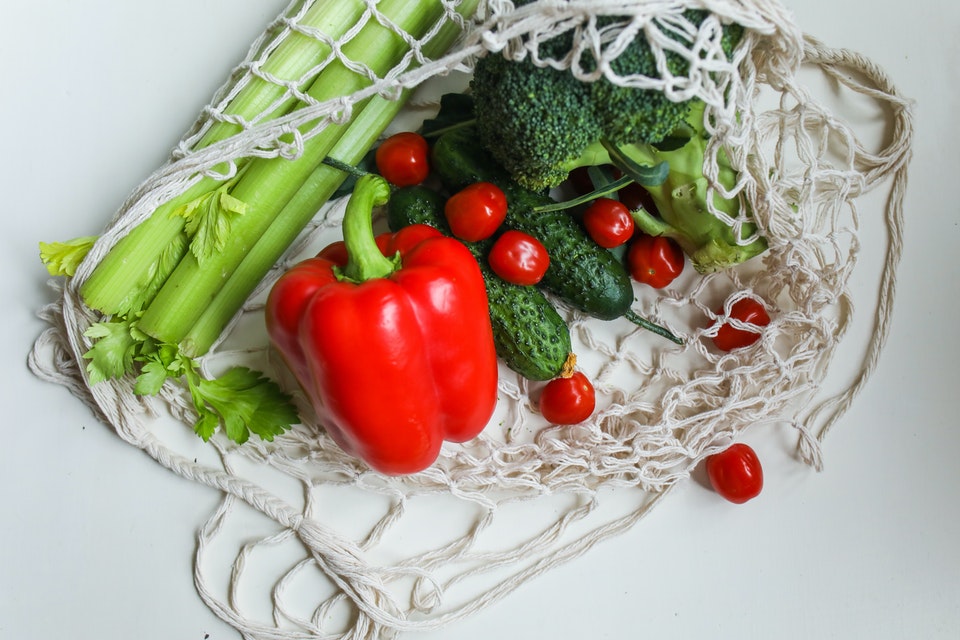
What should you eat to protect yourself from colon cancer?
Recommendations can be made to reduce the risk of developing this disease. Nutrition plays an important protective role. You should limit your consumption of protein, especially animal protein (see our Top meat alternatives). On the other hand, fatty fish (tuna, sardines, salmon, herring, etc.), thanks to the omega-3 it contains, is believed to have anti-inflammatory properties. Why not include a few vegetarian meals in your weekly menu and choose fish over meat? It is also a good idea to reduce your consumption of fats such as butter, cream, processed foods, and dishes with sauces. Choose healthy fats such as olive oil, rapeseed oil, and flaxseed oil.
It is essential to limit your alcohol consumption, or even stop drinking altogether.
On the other hand, you should eat more vegetables, fruit, legumes, and whole grains. The fiber they contain has a protective role and contributes to the diversity of the microbiome. Replace refined flours with whole grain flours (whole grain bread, brown rice, etc.). Eat a variety of seasonal vegetables; half of a balanced plate should contain vegetables (find out more in our article on healthy and balanced eating). Don’t forget to add aromatic herbs such as thyme, oregano, or basil to enrich your dishes with fiber, vitamins, and minerals.
Finally, it is important to maintain a healthy weight. Physical activity plays a beneficial role in weight management and also helps protect against cancer. It is therefore necessary to incorporate it into your daily routine: walking, cycling, swimming, Pilates, dancing, weight training, team sports… there are many ways to combine the useful with the enjoyable!
How is colorectal cancer diagnosed?
As mentioned above, patients with IBD are more prone to developing colon cancer. They should therefore be monitored regularly by a gastroenterologist and undergo appropriate screening.
People with parents who have or have had colon cancer should undergo early screening. Talk to your doctor, as it is essential not to skip these tests: when detected early, this disease has a better chance of being cured with appropriate treatment.
Free for all people between the ages of 50 and 74, screening involves a simple stool sample and can detect early-stage cancer. Talk to your doctor and don’t neglect this test, which allows for early detection, prompt treatment, and therefore increased chances of survival.
Sources:
Microbes, Microbiota, and Colon Cancer. Cynthia L. Sears and Wendy S. Garrett. Cell Host & Microbe, March 12, 2014.
The gut microbiota, bacterial metabolites and colorectal cancer. Petra Louis, Georgina L. Hold, and Harry J. Flint. Nature Reviews Microbiology, September 8, 2014.
Microbiota: a key orchestrator of cancer therapy. Soumen Roy and Giorgio Trinchieri. Nature Reviews Cancer, March 17, 2017.
Global trends in colorectal cancer mortality: projections to the year 2035. Marzieh Araghi, Isabelle Soerjomataram, Mark Jenkins, James Brierley, Eva Morris, Freddie Bray, and Melina Arnold. International Journal of Cancer: 144, 2992–3000, 2019.
Ameli.fr
Discover more articles on the microbiota.
Take care of your microbiota with Nahibu.
Reading time: 7 min · Thank you for reading this article.
Discover the composition of your microbiome.
At-home test - Results within 4 to 8 weeks - Personalised scientific report