Here is a recipe for a vitamin-packed, microbiota-friendly smoothie made with seasonal fruits, perfect for the end of summer.
Partnership between SRFC, Sojasun, Laboratoire M2S, and Nahibu
A unique research project on the gut microbiota of elite athletes
In December 2020, Rennes-based company Nahibu announced its partnership with Stade Rennais Football Club. By joining forces today with the M2S laboratory and the Sojasun Espoir cycling team, Nahibu is embarking on an even more ambitious project: to advance research into the links between nutrition, gut microbiota, and athletic performance.
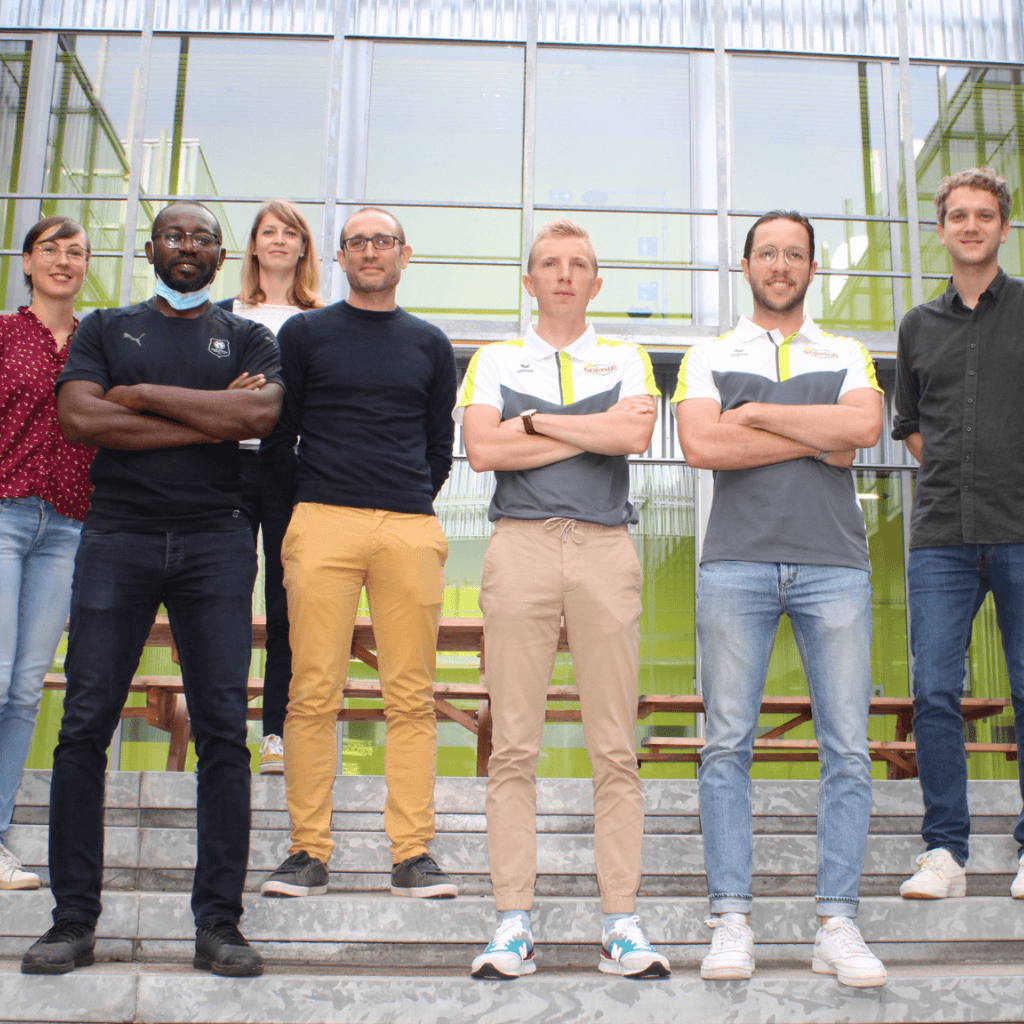
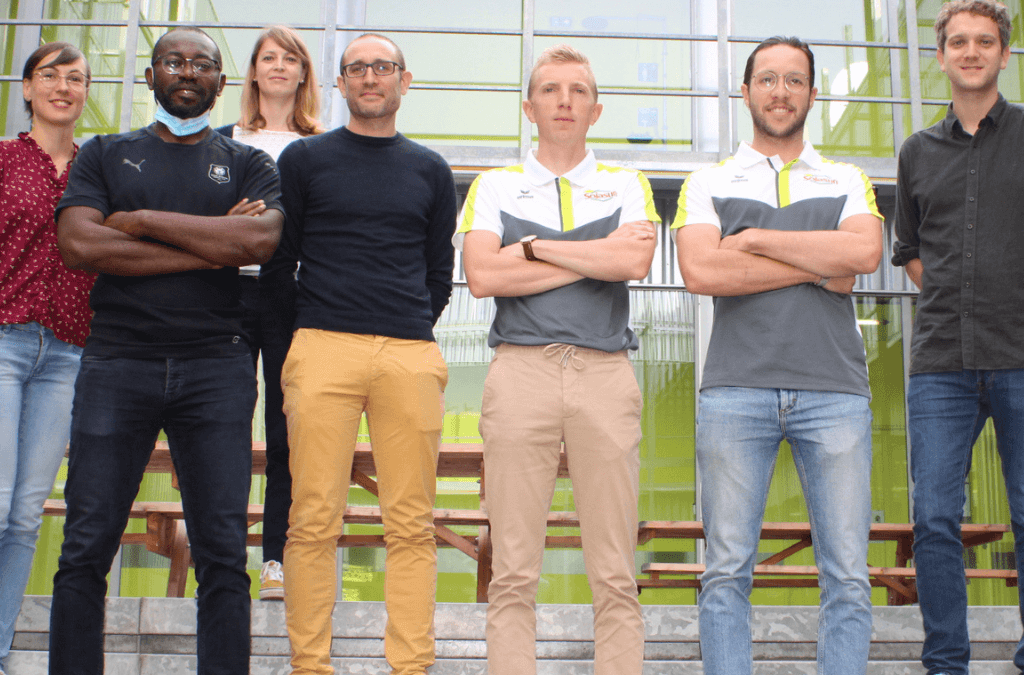
From left to right: Emmanuelle Lecommandeur (Head of Nutrition R&D at Nahibu), Rufin Boumpoutou (Medical Coordinator at SRFC), Chrystèle Cressard (Managing Director at Nahibu), Frédéric Derbré (Senior Lecturer – HDR – M2S Laboratory), Jason Yon Snoeck (Sports Director, Sojasun Espoir), Romain Demay (Scientific Analyst, Sojasun Espoir), Pierre Cressard (President, Nahibu)
The aim of this collaborative project is to characterize the composition of the gut microbiota of elite athletes according to their sport and associated energy requirements.
To do this, various measurements will be compared: observation of values, bacteria, and genes involved in regulating effort and the use of energy sources (carbohydrates, lipids, etc.), based on local populations of high-level soccer players and cyclists (i.e., Stade Rennais FC and Sojasun Espoir).
Once these initial studies have been completed, M2S and Nahibu will seek to understand how the gut microbiota of high-level athletes functions in order to establish real links between the composition of this gut microbiota and indicators of the metabolic and energy profile during exercise in these athletic populations.
The M2S Practise team, involved in this collaborative research project, will be responsible for evaluating the energy metabolism during exercise on its ExerMove platform of high-level athletes (footballers from Stade Rennais FC and cyclists from the Sojasun team). The energy metabolism profiles of these elite athletes during exercise will be compared with those of sedentary and untrained subjects, then correlated with their gut microbiota signature as determined by Nahibu. The aim of this collaborative project is to highlight potential links between the gut microbiota profile and the energy metabolism of elite athletes. It will thus make it possible to establish which parameters can be discriminatory and informative for sports staff in the longitudinal monitoring of gut microbiota, and thus optimize nutritional support or training load management for these elite athletes. Frédéric Derbré, Senior Lecturer-HDR, M2S Laboratory.
The ultimate goal of all these results is to advance science and enable Nahibu to develop gut microbiota analysis kits for athletes in the medium term.
About the Sojasun team
The Sojasun Espoir ACNC Cycling Team is based in Noyal Châtillon sur Seiche (35) south of Rennes. Created by Alain Heulot in 1977, the association has risen to the highest level of French amateur cycling and is now in Division Nationale 1. Today, the team is fortunate to have its own headquarters in the commune of Noyal, enabling it to provide its riders with the best possible conditions. A sports director, a mechanic, a performance coordinator, and a communications officer make up the staff for the fifteen or so riders. Each year, the goal is to train at the highest level, leading the professional teams to the next level.
The team has a few references that prove its successful training: on average, one team member turns professional each year. Some names stand out, such as Pierre Rolland, Guillaume Martin, Jason Tesson, and Emmanuel Morin. In recent years, the team managed by Stéphane Heulot has won four French road cycling championships. In 2021, the team achieved three victories and gained momentum throughout the season, promising a great year in 2022.
Collaboration with Nahibu, our desire, our expectations: As a high-level training program, we are committed to improving our scientific knowledge through this type of partnership. With a desire to leave no detail unattended, we are aware that nutrition plays a particularly important role in the athletic performance and recovery of our athletes. So it will be really interesting for us to find out more about the gut microbiota and to support Nahibu's work through our riders. Finally, we are committed to supporting local projects, and Nahibu's is an ambitious one, which makes us even more eager to join in, says Bastien Charbonnier, Communications Manager at Sojasun Espoir.
About Stade Rennais Football Club
SRFC partners with Nahibu to optimize player performance and health: The goal is to obtain objective data that allows us to understand what is happening and monitor the progress of our efforts. For example, we will prescribe probiotics to players, which aim to nourish the microbiota to improve its performance. As winter approaches, we know that the immune system can be weakened, so we will try to prevent that, says Dr. Boumpoutou, team doctor for Stade Rennais Football Club.
As part of this Research and Development project, the Brittany Region is providing financial support to Nahibu.
Discover more articles on the microbiota.
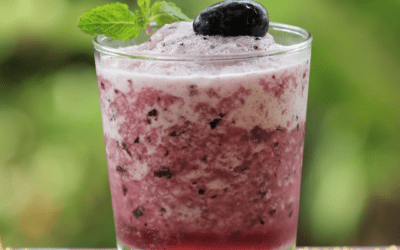
Grape, raspberry, and watermelon smoothie
Nahibu: steps for analyzing your stool sample
All stages of the analysis of your stool sample, up to the mapping of your microbiota.
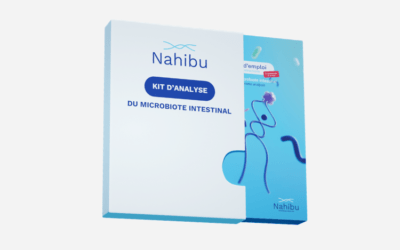
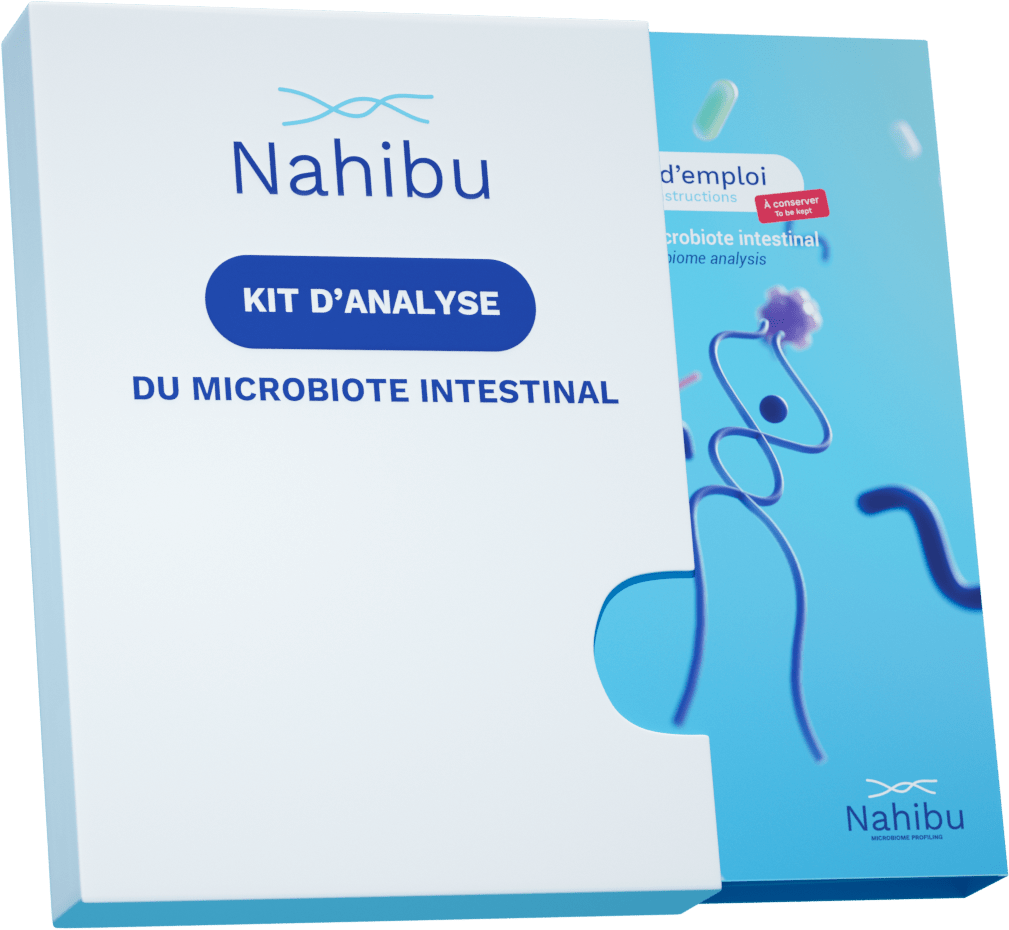
Nahibu: presentation of the sampling kit.
The Nahibu kit is a fecal sample collection kit that can be used at home and requires no medical intervention to analyze your microbiota.
Take care of your microbiota with Nahibu.