
Understanding the Nahibu analysis report
For each analysis, users can download a summary in PDF format. This simplified report from the Nahibu digital platform was designed by gut microbiota experts to make it easier for healthcare professionals to read. It consists of two main sections.
Introduction to the Nahibu analysis report
A general presentation of Nahibu, our objectives, and a brief description of what the gut microbiota is.
A description of how the results were generated. For the report, the user is automatically compared to Nahibu's healthy cohort. This cohort consists of individuals who have not reported any diagnosed chronic diseases or digestive disorders.
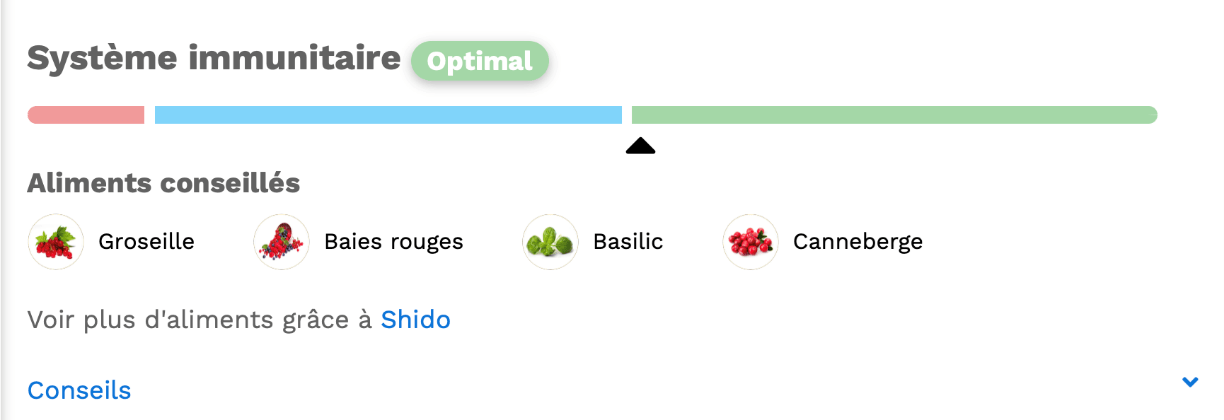
Presentation of the three result categories: Optimal, Average, and Room for Improvement. These results are obtained by comparing the user's value with that of the healthy cohort (ordered). Thus, an Improveable result is one that falls within the 5% of most extreme values (between 0 and the 5th percentile, and above the 95th percentile). The value is Average when it is within the 20% most extreme values of the cohort (between the 5th and 25th percentile, and between the 75th and 95th percentile). Finally, the result is optimal when it falls within the values of plus or minus 25% of the median (between the 25th and 75th percentile).
General information about the user. This information is extracted from the questionnaire previously completed by the user and allows you to view the information necessary to understand the user's lifestyle, medical history, and eating habits.
The results of the gut microbiota analysis
Richness
This refers to the number of bacteria detected in the analysis, which is an essential metric for assessing good health. Indeed, numerous studies show that a decrease in diversity can have an impact on our health. Therefore, the more fiber we consume, and the more different types of fiber we consume, the better it is for the diversity of our gut microbiota and our health.
The enterotype
The aim of enterotypes is to stratify individuals based on their gut microbiota into a limited number of groups, each group being dominated by a particular bacterial genus. Unlike blood types, enterotypes do not have clear boundaries. Depending on the individuals studied and the methods used, the number of groups varies, generally ranging from two to four. The two most robust enterotypes, as found in the majority of analyses, appear to be Prevotella and Bacteroides. The third group originally defined, Ruminococcus, may, depending on the study, be merged with one of the first two or replaced by another group. The Bacteroides enterotype, associated with a diet rich in animal fats, is dominant in the Western world, while the Prevotella enterotype is more prevalent in rural societies with fiber-rich diets. While a short-term diet (less than one month) does not allow an individual to change their enterotype, it is not yet clear whether long-term diets can influence enterotypes.
Intestinal balance
This measures the presence or absence of dysbiosis within the microbiota. Dysbiosis, as opposed to eubiosis, is a term used to describe an altered microbiota with an unbalanced composition. Dysbiosis of the intestinal microbiota is characterized by a decrease in microbial diversity, a decline in the abundance of the Firmicutes phylum in favor of Bacteroidetes, and an increase in the abundance of potentially pathogenic species.
The distribution of phyla
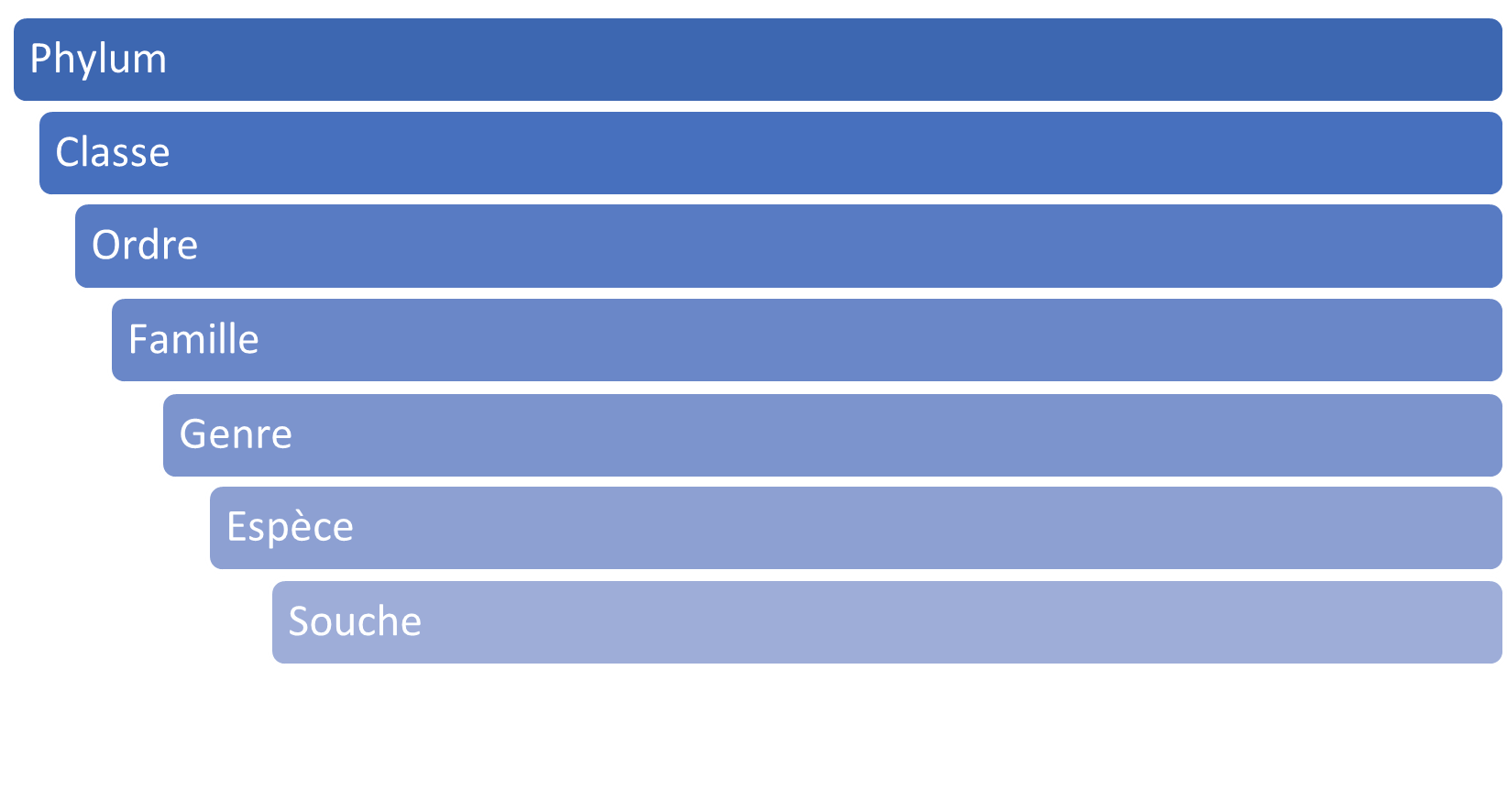
More than 1,000 bacteria present in the gut microbiota have been identified. They are classified into groups at different levels of precision, including phyla. In the gut microbiota, there are three most abundant phyla, which make up about 90% of the adult gut microbiota: Firmicutes, Bacteroidetes, and Actinobacteria. There are other less abundant phyla, such as Proteobacteria and Verrucomicrobia, for example.
List of detected genera and bacteria
This is a selection made by Nahibu of genera and bacteria of interest based on scientific literature. This selection includes 4 genera of interest (Bifidobacterium, Dialister, Coprococcus, Lactobacillus) and 11 bacteria of interest (Akkermansia muciniphila, Faecalibacterium prausnitzii, [Eubacterium] hallii, Bacteroides thetaiotaomicron, Barnesiella intestinihominis, Bifidobacterium longum, Bilophila wadsworthia, Clostridioides difficile, Roseburia intestinalis, [Ruminococcus] gnavus, Veillonella atypica).
Short-chain fatty acid (SCFA) production
SCFA production is stimulated by the breakdown of fiber by bacteria in the gut microbiota. These SCFAs are absorbed by our bodies and have been shown to have several beneficial effects on health: they are a source of energy for colon cells, strengthen the intestinal barrier and immune system, improve colon transit, have an effect on cholesterol and blood sugar levels, reducing inflammation, regulating appetite, and preventing obesity and colorectal cancer, for example.
They therefore have a protective effect against colon diseases. The amount of SCFAs varies and their production can be increased by consuming foods rich in probiotics and fiber. The three main SCFAs are butyrate, acetate, and propionate.
Analysis of the functional potential of the microbiota
Nahibu's analysis of the gut microbiota, based on the quantification of bacterial genes detected in DNA extracted from a stool sample, allows its functional potential to be extrapolated.
The PDF report provides information on the nutritional quality of intake, diversity, prebiotic intake, and the level of intestinal inflammation. All this information is measured in relation to Nahibu's healthy cohort. In addition, the analysis of the functional potential of the microbiota includes a section on the tolerance and intolerance of bacteria to various complex sugars (FODMAPs).
The abundance table
Attached is a list of bacteria detected in significant quantities (>0.01%) in the sample. For each bacterium, the list indicates its classification and relative abundance as a percentage of all bacteria detected in the microbiota.

Discover more articles on the microbiota.

What is the difference between probiotics and prebiotics?
Everything you need to know about probiotics. Probiotics modulate the composition of the gut microbiota and prevent the risk of dysbiosis.
Acting on short-chain fatty acid production
Synthesized by the gut microbiota during food fermentation, short-chain fatty acids play a role in maintaining health and preventing disease.

What is a healthy and balanced diet?
Eating a balanced diet means eating well and in quantities that allow the body to function properly.
Take care of your microbiota with Nahibu.