
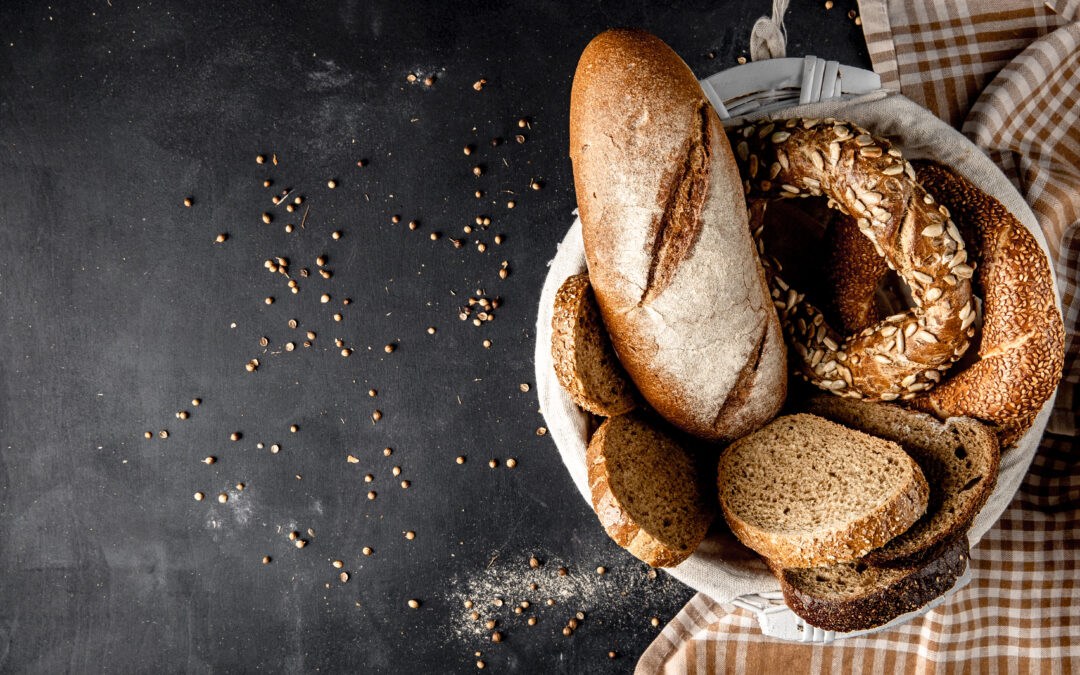
High-fiber bread to improve your gut microbiota? A study backs this up.
Cardiometabolic diseases, which include cardiovascular diseases and metabolic diseases such as high blood pressure and obesity, are affecting more and more people around the world. They are exacerbated by smoking, excessive alcohol consumption, a sedentary lifestyle, and an unbalanced diet (1,2). Certain parameters are disrupted in these diseases, such as cholesterol levels, and can lead to premature death (3,4,5). It is important to prevent these diseases, but also to monitor the associated blood parameters in order to normalize them. In this article, we will see how increasing fiber consumption through enriched bread can have a beneficial effect on cardiometabolic risk by modifying blood test results and the composition of the microbiota in high-risk individuals.
What are the benefits of a high-fiber diet?
A scientific study published in the journal Gut Microbes in March 2022 demonstrated the positive effect of dietary fiber diversity on the regulation of certain blood parameters, including fat profile, in people at high risk of developing cardiometabolic diseases (6).
This study, led by INRAE (French National Research Institute for Agriculture, Food and the Environment) and CRNH (Center for Research in Human Nutrition), tested the effect of a multi-fiber bread, containing a mixture of soluble and insoluble fibers, on subjects with a high cardiometabolic risk. It highlighted an improvement in blood cholesterol levels, LDL cholesterol (commonly known as bad cholesterol), insulin levels, and HOMA (which is used to calculate insulin resistance), as well as changes in the composition of the gut microbiota, in just two months in a population at high cardiometabolic risk.
The 39 subjects monitored (22 women and 17 men) all consumed conventional bread and bread enriched with multiple fibers. Numerous parameters were measured before and after bread consumption in these individuals to assess the effect of enrichment with various fibers. Analysis of the data showed that only fiber-enriched bread altered the composition of the gut microbiota and certain blood values. Indeed, the levels (relative abundance) of specific bacterial species changed after two months of consuming fiber-enriched bread. Conversely, consumption of conventional white bread did not alter the presence of gut bacteria.
In addition to the composition of the gut microbiota, consumption of multi-fiber bread improved certain blood parameters such as total cholesterol, LDL cholesterol, insulin levels, and the HOMA index of insulin resistance. These parameters are disrupted in people with high cardiometabolic risk. The observed decrease in cholesterol levels could be due to an increase in the presence of the bacterium Parabacteroides distasonis with the consumption of multifiber bread. This bacterium can modify bile acids, which are involved in cholesterol production.
Why is fiber important for the gut microbiota?
The gut microbiota is the collection of microorganisms, mainly bacteria, present in the intestine. It was formerly known as the intestinal flora. These microorganisms are present in increasing concentrations from the stomach to the colon (large intestine). We now know that they influence how our bodies function, including digestion, sleep, stress, immunity, and much more. The hundreds of billions of intestinal bacteria that we host contribute to our well-being. It is therefore important to take care of them and promote their diversity and balance, as depleted or unbalanced intestinal flora increases the risk of developing certain chronic diseases.
The study cited above demonstrates the beneficial effect of consuming bread rich in various fibers on certain blood values in people at high cardiometabolic risk. This improvement is accompanied by changes in the composition of the gut microbiota.
Why is fiber important for the gut microbiota and, more generally, for health, as this study shows? Are all fibers equal?
Plant fibers are compounds that are indigestible by humans, mainly found in fruits, vegetables, whole grains, and legumes. There are soluble fibers and insoluble fibers. Both have important and complementary roles. To put it simply, soluble fibers feed the gut microbiota, while insoluble fibers stimulate intestinal transit.
How can you increase your fiber intake?
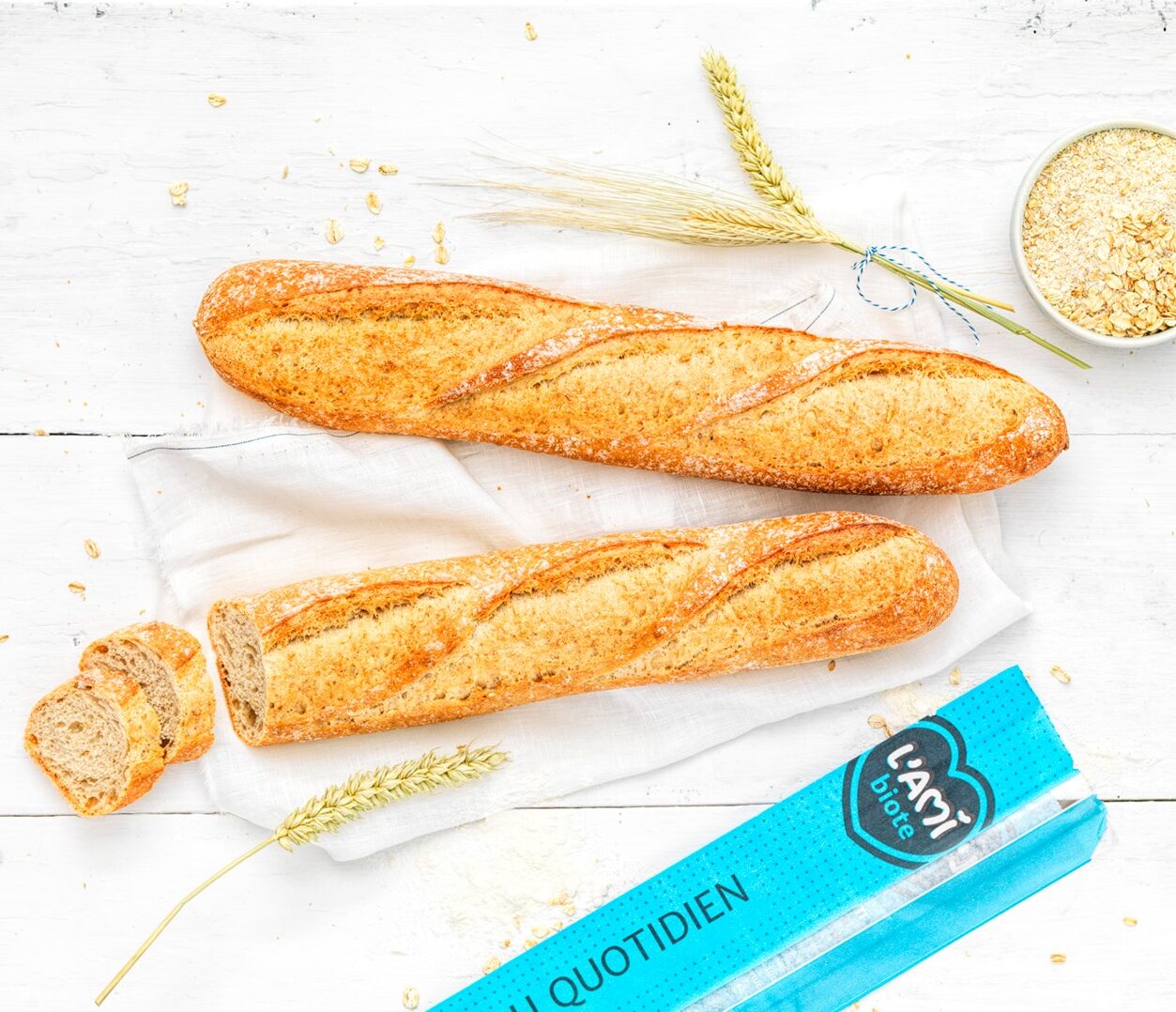
ANSES (the French Agency for Food, Environmental and Occupational Health & Safety) recommends consuming around 30 grams of fiber per day. However, the average French person consumes just 20 grams (7). It is therefore important to enrich our diet with fiber-rich foods such as whole grains, legumes, and vegetables. However, it can be difficult to incorporate more fiber into your diet. One simple way to do this is to choose an everyday product, such as high-fiber bread.
In fact, it was a fiber-enriched bread that was tested in the study conducted by INRAE and CRNH Rhône Alpes. The bread studied provides a significant amount and variety of fiber thanks to a blend of seven soluble and insoluble plant fibers. This makes the bread three times richer in fiber than a traditional baguette (which contains 3.8 g of fiber per 100 g of bread) (8).
The effects of fiber-enriched bread proven by study
Eating a sufficient amount of varied fiber every day is important for stimulating the growth of different types of bacteria in the gut microbiota, so it is necessary to vary the sources of fiber.
The INRAE study (6) tested the effectiveness of a commonly consumed product. This bread, enriched with seven types of fiber, had an effect on the gut microbiota by modifying the presence of certain bacterial species and also regulated cholesterol and insulin levels and the HOMA index of insulin resistance. It reminds us of the important role that consuming a variety of plant fibers plays in our health.
Sources:
1. Tahira Farooqui. Chapter 10 – Link between gut microbiome and cardiometabolic diseases. Gut Microbiota in Neurologic and Visceral Diseases, 2021, Pages 185-205. https://doi.org/10.1016/B978-0-12-821039-0.00013-7
2. Gundu HR Rao. Cardiometabolic Diseases: A Global Perspective. Journal of Cardiology and Cardiovascular Therapy, Volume 12, Issue 2, 2018
3. Richard Kones & Umme Rumana. Cardiometabolic diseases of civilization: history and maturation of an evolving global threat. An update and call to action. Annals of Medicine, Volume 49, 2017 – Issue 3. https://doi.org/10.1080/07853890.2016.1271957
4. Joseph Fomusi Ndisang and Sharad Rastogi. Cardiometabolic Diseases and Related Complications: Current Status and Future Perspective. BioMed Research International Volume 2013.
5. Nilay S. Shah, Donald M. Lloyd-Jones, Martin O’Flaherty, Simon Capewell, Kiarri Kershaw, Mercedes Carnethon, and Sadiya S. Khan. Trends in Cardiometabolic Mortality in the United States, 1999-2017. JAMA. 2019 Aug 27; 322(8): 780–782.
6. Ranaivo H, Thirion F, Béra-Maillet C, Guilly S, Simon C, Sothier M, Van Den Berghe L, Feugier-Favier N, Lambert-Porcheron S, Dussous I, Roger L, Roume H, Galleron N, Pons N, Le Chatelier E, Ehrlich SD, Laville M, Doré J, Nazare JA. Increasing the diversity of dietary fibers in a daily-consumed bread modifies gut microbiota and metabolic profile in subjects at cardiometabolic risk. Gut Microbes. 2022 Jan-Dec;14(1):2044722. doi: 10.1080/19490976.2022.2044722. PMID: 35311446; PMCID: PMC8942430.
7. https://www.anses.fr/fr/content/inca-3-evolution-des-habitudes-et-modes-de-consommation-de-nouveaux-enjeux-en-mati%C3%A8re-de#:~:text=Fiber%20intake%20
8. https://ciqual.anses.fr/
Discover more articles on the microbiota.

What is the difference between probiotics and prebiotics?
Everything you need to know about probiotics. Probiotics modulate the composition of the gut microbiota and prevent the risk of dysbiosis.
Acting on short-chain fatty acid production
Synthesized by the gut microbiota during food fermentation, short-chain fatty acids play a role in maintaining health and preventing disease.

What is a healthy and balanced diet?
Eating a balanced diet means eating well and in quantities that allow the body to function properly.
Take care of your microbiota with Nahibu.