

Immunity Begins in Your Gut
Did you know that nearly 70% of your immune system's cells are found in your gut?
This figure alone illustrates the central link between the gut microbiota and the body's protection. A veritable ecosystem composed of billions of microorganisms, the microbiota not only aids digestion: it educates, modulates, and regulates immunity on a daily basis. When its balance is disrupted, a condition known as intestinal dysbiosis, the immune system can weaken or, conversely, become excessive and cause inflammation.
Understanding the link between microbiota and immunity is therefore essential for maintaining overall health. This is precisely what Nahibu analysis does, using shotgun metagenomic sequencing, the most advanced technology for exploring this invisible ecosystem and providing you with a roadmap to better intestinal well-being.
The gut: the command center of the immune system
The main role of the intestine is to ensure the absorption of nutrients from food into the bloodstream. Due to this constant contact with the external environment, it requires increased protection. This is why the intestine is the organ with the highest concentration of immune cells and the most active antibody production, making it a key organ for immunity.
It is lined with a specific immune tissue called GALT (Gut-Associated Lymphoid Tissue), which houses this high density of immune cells (lymphocytes, macrophages, etc.). The role of these cells is to continuously monitor what comes into contact with the body, whether nutrients, beneficial bacteria, or pathogens, and to respond appropriately.
In this context, the microbiota plays a decisive role:
- It teaches the immune system to tolerate harmless microorganisms.
- It triggers appropriate responses against pathogens.
This immune education begins at birth and continues throughout life.

The Intestinal Barrier: Highly Sophisticated Protection
To maintain this state of vigilance and tolerance, the intestine operates a defense system at various interconnected levels:
The Intestinal Epithelium (Selective Defense)
Intestinal cells (enterocytes) are connected to each other by tight junctions, ensuring selective permeability: only beneficial nutrients pass through. A disruption of this barrier (often called intestinal hyperpermeability) can allow toxic molecules to pass through and promote chronic inflammation.
The Mucosa and Mucus (Physical Defense)
Intestinal mucus forms a physical barrier rich in IgA antibodies and antimicrobial peptides. A balanced microbiota directly contributes to the quality of this protective layer, preventing unwanted bacteria from reaching the intestinal wall.
GALT (Immune Defense)
GALT immune cells receive information from the intestinal lining (particularly the microbiota) and epithelial cells. This dialogue triggers an appropriate immune response in the event of a pathogen invasion.
Commensal Microbiota (Biological Defense)
The 1013 beneficial microorganisms that make up the intestinal microbiota protect the body in two ways:
Barrier Effect:
They occupy space and compete with pathogens, preventing them from establishing themselves.
Production of Protective Substances:
They secrete bacteriocins and modulate pH, creating an environment that is hostile to unwanted microbes.
How the Microbiota Specifically Regulates Immunity
The dialogue between bacteria and immune cells is biochemical and relies on metabolites produced by our flora.
The Key Role of Short-Chain Fatty Acids (SCFAs)
Dietary fiber, which is not digested by our enzymes, is fermented by the microbiota. This process leads to the production of short-chain fatty acids (SCFAs), including butyrate, propionate, and acetate, which are essential for intestinal health.
SCFAs are crucial because they:
- Nourish colon cells, for which they are the main source of energy.
- Modulate the activity of immune cells.
- Strengthen the intestinal barrier.
Butyrate, in particular, promotes the development of regulatory T cells (Tregs), which are responsible for maintaining immune tolerance and controlling inflammation.
Finding the Balance Between Tolerance and Defense
A healthy microbiota maintains a delicate balance between:
- Anti-inflammatory Responses (Tolerance): Essential for preventing excessive reactions to food or beneficial bacteria. They play a protective role against allergies and autoimmune diseases.
- Controlled Pro-inflammatory Responses: Necessary for eliminating pathogens.
This balance is fundamental to ensuring effective immunity without excess. A breakdown in this tolerance can lead to chronic inflammation, often linked to intestinal dysbiosis.
Intestinal Dysbiosis: When Immunity Goes Haywire
Intestinal dysbiosis is characterized by a loss of microbial diversity and an imbalance in favor of opportunistic species. This imbalance directly impacts the immune system by reducing the production of SCFA and altering the intestinal barrier.
Dysbiosis is strongly associated with (Source: AP-HP Research Foundation; COPMED):
- Chronic inflammatory bowel diseases (IBD)
- Autoimmune diseases (lupus, rheumatoid arthritis, etc.)
- Food allergies and intolerances
- Increased vulnerability to infections
Maintaining a diverse and balanced microbiota, particularly through a rich and varied diet, is therefore a major lever for supporting immunity and overall health.
How
Regulation is mainly based on metabolites produced by bacteria, such as Short-Chain Fatty Acids (SCFAs). These molecules act as signals for immune cells, promoting in particular the production of Regulatory T Cells (Tregs) which maintain tolerance and control inflammation.
What
Shotgun metagenomic sequencing is the technique used to measure the functional potential of your microbiota. For immunity, this means that Nahibu can assess your flora's ability to produce AGCCs (anti-inflammatory molecules) and strengthen the intestinal barrier, crucial information that cannot be obtained using basic analysis methods.
What
Signs include increased vulnerability to infections, chronic inflammation, allergies, or food intolerances. Intestinal dysbiosis can compromise the intestinal barrier and disrupt the balance between immune responses (tolerance vs. defense), requiring targeted action.
Nahibu: Understanding Your Immunity Through Metagenomic Sequencing
To effectively improve your gut health and, consequently, your immunity, it is essential to identify the weaknesses in your microbiota.
Nahibu uses shotgun metagenomic sequencing, the most comprehensive technology for analyzing the gut microbiota.
Unlike targeted analysis methods, shotgun technology allows:
- Identify bacteria down to the species level, providing the most comprehensive mapping possible.
- Analyze the biological functions that are actually present (production of SCFAs, vitamins, immunomodulatory metabolites).
- Assess the condition of your intestinal barrier and your inflammatory potential.
Why is Nahibu's expertise the key to your intestinal well-being?
- 🔬 High Scientific Accuracy: Reliable results to understand the functional state of your flora.
- 🇫🇷 French Expertise: Quality guarantees and rigorous protocols.
- 🎯 Personalized Recommendations: We offer you a roadmap for tailored nutrition (via the Shido platform and our network of qualified professionals) to take concrete action on the balance of your microbiota and your defenses.
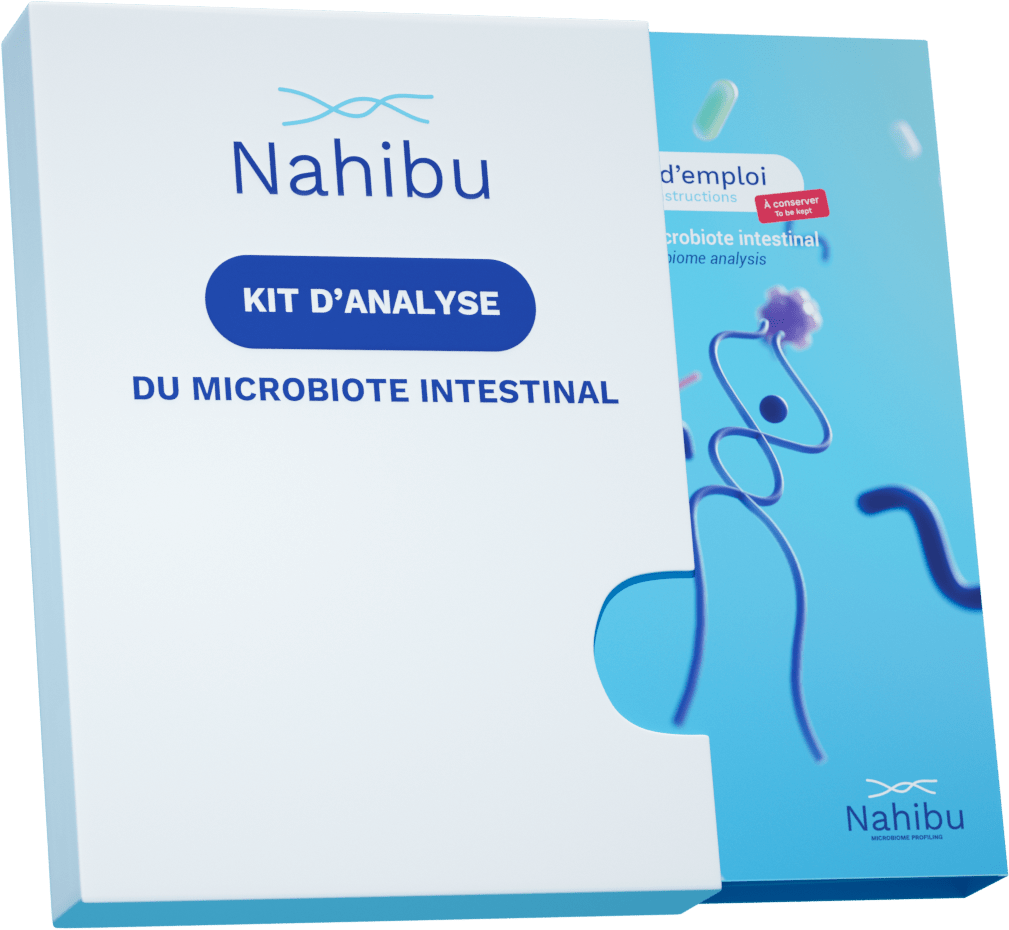
Take care of your microbiota with Nahibu.
Conclusion: Your Immunity Begins in Your Microbiota
The science is clear: a balanced microbiota is a fundamental pillar of immunity. By taking care of your gut health, you are directly influencing your natural defenses and preventing inflammatory diseases.
With Nahibu, you no longer have to guess: you understand the mechanisms that link your microbiota to your immune system. Thanks to our expertise in metagenomic sequencing, we give you the keys to move from theory to action.
Sources:
- Biocodex Microbiota Institute – Role of the gut microbiota in immune regulation
- Lescuyer Laboratory – Microbiota and immunity
- COPMED – Gut Microbiota and the Immune System
- AP-HP Research Foundation – Gut microbiota and research
- Medicine/Science – Microbiota-immunity interactions
Take care of your microbiota with Nahibu.
Discover more articles on the microbiota.

Understanding your gut microbiota analysis report
We explain how to interpret the Nahibu analysis report to better understand your gut microbiota.
The diversity of the gut microbiota: a key indicator of your health?
A high diversity of gut microbiota is often associated with the proper functioning of the body and helps to stay healthy.
Nahibu: steps for analyzing your stool sample
All stages of the analysis of your stool sample, up to the mapping of your microbiota.
Take care of your microbiota with Nahibu.